
Internment by Samira Ahmed

On the cover of the first printing of Internment, there is a young woman dressed in all black, a brick wall and red barb wire seemingly painted across her torso, and we also see the moon and stars. However, this book has been defined by this young woman wearing a cap that states, “RESIST”. In one word, the cover encapsulates the themes and premise of Samira Ahmed’s novel that “takes place fifteen minutes into the future,” referencing President Donald Trump’s Muslim Ban.
Layla Amin’s family is torn from their home and sent to a faraway internment camp with other Muslims. She and a newfound friend see the prejudice as Exclusion Guards maintain the army-like order of the camp. Especially when the Director talks down to the internees and enforces his rules with acts of violence, Layla yearns for the normalcy of school and meeting up with her boyfriend, David, who is not Muslim. However, there will never be the same normalcy.
Before all hope is lost, one Exclusion Guard becomes the middle-man between seventeen-year-olds Layla and David, even sneaking him inside the internment camp. Though Layla is only one internee out of thousands, she resists the hate and violence. Even when stakes rise to terrifying heights, she resists.
Ahmed has written a novel that is timely and realistic. At the end of the book, Ahmed acknowledges the internment camps for Japanese-Americans during WWII. Today, we are living in a time in which Internment is a very real story for some people, for all Americans. With the Muslim Ban, or Travel Ban, in place, it is so easy to see the actual fear some people—and the government—have about Muslims.
This novel is scary because of how much truth rests in its pages. Ahmed is both political and emotional. She is vulnerable through the eyes of Layla and other internees. She is calling for action: resist.

Symptoms of Being Human by Jeff Garvin
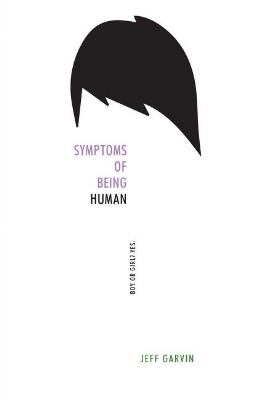
Jeff Garvin’s Symptoms of Being Human is the first book I’ve read with a gender fluid protagonist. While Garvin touches on sexual orientation, he mainly focuses on gender identity, being sure to clarify the distinction between the two notions through the characters’ interactions (mainly in the awful things people say to Riley, the main character). Riley’s attraction to Bec, a female, has nothing to do with the way Riley feels on a day-to-day basis. Furthermore, there is the distinction between being gender fluid and being transgender, though trans characters are present in the novel, as well.
Riley describes being gender fluid as being on a “dial,” which I find to be a fantastic metaphor for gender fluidity. Riley also suffers from dysphoric episodes, in which Riley doesn’t feel like the physical body the character is in. That dysphoria can come up when Riley is feeling either more feminine or more masculine but is forced to appear a certain way contrary to Riley’s instincts. Especially being the child of a congressman up for reelection, Riley is spotlighted as part of the father’s campaign as well as the new kid in school who dresses androgynously.
Of course, Riley has always been bullied for dressing this way. In Riley’s old and new school, there are incidents of homophobia and transphobia. People always want to know if Riley is a girl or a boy. The cover of Symptoms of Being Human even poses the question, “Boy or girl?” and answers it with, “Yes.” This itself is accurate and enticing for readers who wonder about Riley and people like Riley. In the many incidents of bullying in school and horrific assaults that happen to Riley due to other students’ attempts to reveal Riley’s sex, there is no reveal to the reader but only the story that matters. By emphasizing the horror of the assaults, Garvin essentially says Riley’s sex doesn’t matter; what matters is this happens.
I love how the reader is never told of Riley’s sex, the physical body that makes up Riley. This withholding of information keeps the reader guessing one thing and then changing their mind because of Riley’s reaction to something. This happens continuously, challenging the reader’s own preconceptions of gender and societal gender norms. Sometimes these sways in trying to peg Riley are done so subtly that the reader doesn’t catch themselves until they’re in the pitfall like everyone else. The reader becomes the judge, which is, in this case, judging the character based on what is considered feminine or masculine and why it matters enough to peg Riley as such. Challenging the reader like this is a wonderfully bold move that is eye-opening, even to those who are open to different ideas of gender and sexuality. While this technique can be seen as a trap, it’s a good trap to be in to really check ourselves and the way we view individuals.
Riley takes to blogging about gender fluidity and becomes an online source for advice for teens struggling with gender identity and sexual orientation. Feeling ill-equipped to provide advice, seeing as Riley has not even spoken about being gender fluid in person, other than to a therapist, Riley dispenses the best advice that seems valid at the time. A national incident of domestic abuse that stemmed from Riley advising a girl to return home after coming out as trans to her parents causes Riley to, again, be spotlighted. Then, in the slush of hate mail and thank yous, Riley is threatened by an anonymous person who implies they go to Riley’s school. Riley is terrified of being outed and what will happen if that happens—for Riley and for the congressman’s campaign.
Symptoms of Being Human is a very true-to-life narrative of what some people feel like. It tells a story about gender in a way I don’t think many people have read before. And while Riley’s physical description is ambiguous, there is no shortage of connection to this character and what Riley goes through as a gender fluid person. In fact, character relatability and hope for Riley is what draws me to the story. I feel like I know Riley really well, just as I would expect from any other novel.
Find Symptoms of Being Human here.