
Girl Made of Stars by Ashley Herring Blake

Girl Made of Stars is a story that needs more attention than it’s gotten so far. Ashley Herring Blake uses the tropes of twin psychology and astrology/mythology to push the main topic of discussion, which is rape, particularly consent. Sexual orientation and gender identity are also present in the book but are addressed in ways that normalize these notions.
There is a lot to untangle here. Mara and Owen are twins in high school, and like many twins, have a deep emotional and mental connection to one another. They have always been there for each other, until now, when Owen is accused to raping his girlfriend, Hannah. Mara is torn between her love for her brother and her friendship with Hannah but is also aware of the way society silences women who come forward about sexual assault. Now, Mara has to pick a side. Due to secrets of her own, Mara does, and it sends her into a terrible spiral within the family, her circle of friends, and within herself.
Mara turns to her best friend and ex-girlfriend, Charlie, for support. There is tension between Mara and Charlie as they both seek relationships with other people (Mara being bisexual and Charlie being a lesbian and non-binary). However, with this nightmare of an event, Charlie tries to act as the comfort Mara needs while maintaining friendship status; Mara wants Charlie’s support but is upset when she sees Charlie with another girl. This tension is constant throughout the book, fueling Mara’s negative view of herself and dependency on Alex, Owen’s best friend, for romantic intimacy.
In the meantime, Hannah wants to hide, while Owen tells his side of the story, making everyone believe him. But no one ever believes the woman anyway, according to Mara and Hannah. The girls come together to comfort one another in their grief. Girl Made of Stars is about overcoming this self-silencing and being silenced. It’s about giving power to the victims of sexual assault and the trauma it leaves its victims. While society continues to point fingers at the victim, Blake suggests an urgency to show all sides of a story, even the ones that make us uncomfortable and are difficult to admit truth. This book is a must-read because it shows the necessity of coming forward and the process/aftermath of being a victim encouraged to become a survivor.
Find Girl Made of Stars here.

Symptoms of Being Human by Jeff Garvin
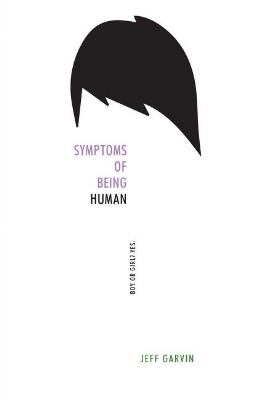
Jeff Garvin’s Symptoms of Being Human is the first book I’ve read with a gender fluid protagonist. While Garvin touches on sexual orientation, he mainly focuses on gender identity, being sure to clarify the distinction between the two notions through the characters’ interactions (mainly in the awful things people say to Riley, the main character). Riley’s attraction to Bec, a female, has nothing to do with the way Riley feels on a day-to-day basis. Furthermore, there is the distinction between being gender fluid and being transgender, though trans characters are present in the novel, as well.
Riley describes being gender fluid as being on a “dial,” which I find to be a fantastic metaphor for gender fluidity. Riley also suffers from dysphoric episodes, in which Riley doesn’t feel like the physical body the character is in. That dysphoria can come up when Riley is feeling either more feminine or more masculine but is forced to appear a certain way contrary to Riley’s instincts. Especially being the child of a congressman up for reelection, Riley is spotlighted as part of the father’s campaign as well as the new kid in school who dresses androgynously.
Of course, Riley has always been bullied for dressing this way. In Riley’s old and new school, there are incidents of homophobia and transphobia. People always want to know if Riley is a girl or a boy. The cover of Symptoms of Being Human even poses the question, “Boy or girl?” and answers it with, “Yes.” This itself is accurate and enticing for readers who wonder about Riley and people like Riley. In the many incidents of bullying in school and horrific assaults that happen to Riley due to other students’ attempts to reveal Riley’s sex, there is no reveal to the reader but only the story that matters. By emphasizing the horror of the assaults, Garvin essentially says Riley’s sex doesn’t matter; what matters is this happens.
I love how the reader is never told of Riley’s sex, the physical body that makes up Riley. This withholding of information keeps the reader guessing one thing and then changing their mind because of Riley’s reaction to something. This happens continuously, challenging the reader’s own preconceptions of gender and societal gender norms. Sometimes these sways in trying to peg Riley are done so subtly that the reader doesn’t catch themselves until they’re in the pitfall like everyone else. The reader becomes the judge, which is, in this case, judging the character based on what is considered feminine or masculine and why it matters enough to peg Riley as such. Challenging the reader like this is a wonderfully bold move that is eye-opening, even to those who are open to different ideas of gender and sexuality. While this technique can be seen as a trap, it’s a good trap to be in to really check ourselves and the way we view individuals.
Riley takes to blogging about gender fluidity and becomes an online source for advice for teens struggling with gender identity and sexual orientation. Feeling ill-equipped to provide advice, seeing as Riley has not even spoken about being gender fluid in person, other than to a therapist, Riley dispenses the best advice that seems valid at the time. A national incident of domestic abuse that stemmed from Riley advising a girl to return home after coming out as trans to her parents causes Riley to, again, be spotlighted. Then, in the slush of hate mail and thank yous, Riley is threatened by an anonymous person who implies they go to Riley’s school. Riley is terrified of being outed and what will happen if that happens—for Riley and for the congressman’s campaign.
Symptoms of Being Human is a very true-to-life narrative of what some people feel like. It tells a story about gender in a way I don’t think many people have read before. And while Riley’s physical description is ambiguous, there is no shortage of connection to this character and what Riley goes through as a gender fluid person. In fact, character relatability and hope for Riley is what draws me to the story. I feel like I know Riley really well, just as I would expect from any other novel.
Find Symptoms of Being Human here.

My Lesbian Experience with Loneliness & My Solo Exchange Diary by Nagata Kabi

As graphic memoirs are trending, especially ones written and drawn by webcomic artists, Nagata Kabi’s My Lesbian Experience with Loneliness and her sequel, My Solo Exchange Diary, stand out as queer stories with quite a bit of frankness. Kabi does NOT hold back when discussing her bouts of anxiety, sexual frustrations, awkward and unhealthy familial bond, and of course loneliness. These books illustrate Kabi’s experience as an adult navigating life as a Japanese college dropout living at home with her parents.
Living at home as a 28 year old may not be anyone’s dream, but sometimes that’s where life drops us. After leaving college, Kabi tries to hold down part-time jobs, but her anxiety and depression get in the way. She can’t seem to get out of bed on most days or even eat, spiraling Kabi into a terrible eating disorder. She loses her sense of self, which to Kabi means having security, direction, and purpose. But most importantly, she cannot find a sense of belonging.
Without knowing who she is and where she’s supposed to be, Kabi wallows in grief, disrupting her stability and further disappointing her parents, who seem to only care about Kabi getting a full-time job. Through this, Kabi also deals with loneliness and a lack of physical intimacy. Therefore, Kabi seeks a lesbian escort agency, but when she meets with the escort, it’s not what Kabi expects. She isn’t “cured” in any way but instead plagued with more questions about the way she doesn’t communicate with people outside of her family, fostering a rather Freudian attachment to her mother.
My Lesbian Experience with Loneliness not only focuses on Kabi’s sexual repression and awakening but mostly her journey toward self-awareness and self-love, digging her way out of the hole of mental illness, and gaining independence. This is also the case in My Solo Exchange Diary, in which Kabi discusses the aftermath of putting out her debut manga into the world and what’s happening during and post-publication. The reader is privy to the artist’s struggles of creating My Solo Exchange Diary, which is pretty cool and meta.
In the sequel, Kabi works toward communicating with past friends and trying to separate herself from her parents, particularly her mother, who falls ill. Kabi is still dealing with many of the same pains as she does in the first book, which may seem redundant but rings true to life. Kabi moves out, but quickly moves to another apartment, and then moves back in with her family. She recognizes this cycle as similar to the one when she couldn’t hold down a job. Soon, she realizes what responsibility, independence, and unhappiness really means for her.
Throughout this book, Kabi struggles with her relationship with her mother. She wants to be independent but is really reliant on her and wants to please both parents. Her mother even calls Kabi’s debut, My Lesbian Experience with Loneliness, something to be ashamed of. At the same time, Kabi is still struggling with loneliness, being 29-years-old and having never kissed someone she likes and likes her in return. The idea of loving and being loved is the new aspect in the sequel. Kabi’s quest to find this in a friend she is reunited with, the same lesbian escort agency, and a new acquaintance is the refreshing newness the sequel needs to not be overly repetitive of the first book. Kabi begins to understand her loneliness and the need to love oneself in order to boost her self-esteem. While she still struggles with anxiety and depression, she overcomes some of her ill-fated thoughts of herself. This book is about the journey toward finding oneself in the midst of success yet impending loneliness.
Nagata Kabi has a unique way of illustrating her battles with mental health, particularly in the way she often draws the person she wants to be and a persona of her mind telling her to do whatever it takes to please her parents. There are many images of this persona literally holding back another Kabi, who is reaching for something far away. Kabi also uses black and pink strokes against a white background to illustrate the doom she feels inside her head. Kabi’s images are often literal depictions of philosophical or mental states of anxiety and dilemmas. They are coupled with big, harsh dialogue bubbles (more like large spiky things to emphasize her inner screaming) that describe her thoughts. She isn’t afraid to overuse ALL CAPS AND EXCLAMATION POINTS!!! when illustrating these thoughts, which makes the comic authentic to Kabi’s actual mental state. While the constant usage of these techniques and her setbacks are redundant, this rings true to the side effects of depression and anxiety. Sometimes it feels like one is in a constant state of doom or in a cycle one cannot escape. This book makes the reader experience that nature, which becomes somewhat frustrating, thus perhaps eye-opening to these mental health problems.
Both of Kabi’s books are self-reflective in nature, including narrative commentary from the present Kabi about her past thoughts and emotions. She often says things like, “Later I would learn…” or “Now I know…” The reader is engaging with the musings of the creator, which is not unique to graphic memoirs but gives the reader the idea that one is always learning. And now that this is a series with another book set to be published in 2019, the reader is left wondering how Kabi is doing now and what has developed in her outlook on life and the progress she is making for herself.
Find My Lesbian Experience with Loneliness and My Solo Exchange Diary here.

Queer: A Graphic History by Meg-John Barker and Julia Scheele

Meg-John Barker’s Queer: A Graphic History is very properly named. With comic illustrations by Julia Scheele, Barker provides an overview of the history of queerness, citing many players involved in queer activism and queer theory. This book is best used as a reference book or a springboard to delve into the many, many avenues queerness has taken over the years. I especially think it’s a good book, in an academic sense, for an introduction to queer theory, or queerness, or gender/sexuality studies. Readers and students can learn a lot from specific pages and then launch into their own research from there. In addition, Barker provides a Resources section of her research as well as other resources that may be helpful. As for a cover-to-cover read, well, there’s a lot to take in.
First, Barker defines the word queer and its use as different parts of speech, including a noun, verb, and adjective. What’s important here is how scholars and people queer an idea, or turn an idea around, twisting it into something different or strange or something one hasn’t thought of before, which can bring about change and positive thinking.
Barker then breaks down the differences between identity politics and queer theory; gender, sex, and sexuality; nature and nurture; and sex and gender. Most important here is the shift in the notion that the meaning of sexuality went from one of behavior to one of identity based on attractions and sexual preferences. To cover these topics, Barker along with Scheele provide a detailed yet concise overview of queer theory and activism (the gay rights movements similarities to black feminism and the struggles of multi-marginalized peoples) as well as key figures and thinkers in conversation with one another.
To make these ideas more accessible to the reader, Barker and Scheele put these ideas in cartoons and pop culture references. Barker claims queer theory is known to be hard for most people to understand and is full of multiple binaries to diffuse the idea of binaries, thus making itself contradictory and making it inaccessible to the common person, which is why it has not been as widely recognized as other fields of study. Barker concludes with the hope that this book makes the introduction to queer theory and queerness a bit easier to grasp, which it can when taken in small doses, like a reference book. Whether or not this book is successful is in how the reader uses the book and their explorations from there.
Find Queer: A Graphic History here.

Burro Hills by Juila Lynn Rubin with Interview!

Burro Hills by Julia Lynn Rubin is a ferociously wild ride, one that will leave you with whiplash but also wanting more! With an eccentric cast of characters, there is never a dull moment in this town. From high school gossip to household dramas to drug trafficking, we follow an unexpected group and are given small breaths of reprieve throughout the novel. In this way, it almost feels like the reader is on this high with the characters, mimicking the bursts of adrenaline.
The story follows Jack, who sticks with his pot-smoking crew and his other best friend Jess. However, the new kid, Connor, rattles the status quo of the group, tearing Jack’s attention away from his friends. Connor seems to know exactly who he is: a kid who gets into trouble—oh, and he’s bisexual. On the other hand, Jack absolutely doesn’t know who he is. By spending time with Connor, Jack opens up and reveals to himself who he really is.
However, what about his old friends? They don’t forgive him for ditching them. And in a town riddled with homophobia, crime, and vengeance, there is no safe space for Jack—not even in his own home, where his dad is a drunk and his mother has a problem Jack cannot understand.
The following is an interview with author Julia Lynn Rubin:
CL: Congratulations on an amazing debut novel! Each character has so much depth, and they all jump off the page as realistic people. What made you write about a group of teen boys?
Julia Lynn Rubin, photo via www.julialynnrubin.com
JLR: Thank you so much! That is such high praise and I’m so flattered! I think I’ve always been fascinated by teen boys and why they say what they do, act how they act. It wasn’t a conscious decision when I first started the novel, but as I kept writing, it evolved into this deep-dive exploration of toxic masculinity. I had a lot of fun with their dialogue and characterizations and making them as “awful” as possible on the surface, while examining how sensitive and confused they are underneath all that exterior bullshit. Basically, in different circumstances, these boys wouldn’t be “bad.”
CL: This was a very interesting read for me since I know you personally. So I want to know which character you think you align with the most and why.
JLR: It’s definitely Jack. He’s the most autobiographical character to me, emotionally at least. I remember my dad read an early draft of the book back when it was a dual point-of-view between Jack and Jess, and he said: “You’re not Jess. You’re Jack.” That stuck with me, and helped inform my decision to make him the sole POV character when my agent and I were revising. He’s sensitive, anxious, thoughtful, observant, and a little too wrapped up in his own interiority to the point that he sometimes misses the obvious and misreads the situation. His cognitive distortions are all too familiar to me.
CL: You really put these characters through the wringer. People say to make your characters go through hell, to make the worst possible things happen to them in order to incite drama and conflict, and you do exactly that. Was there ever a moment in which you or your editor thought there was too much going on that the story would be found unbelievable? Did you have to pull back?
JLR: I remember revising and thinking, “I feel so bad for what I’m doing to these characters.” I even said that to my editor at one point. There are a handful of scenes and moments I kept second-guessing, wondering if I should put them in a YA novel since they’re so damn disturbing (though I know teens can totally handle it). But it’s true, you really have to up the stakes, especially in a character-driven story. And these characters are teenagers, so everything feels very life and death to them, very immediate and all-consuming. I actually had a few major scenes that I ended up either cutting or completely rewriting because they didn’t feel as believable in retrospect. I don’t want to spoil anything, but the whole final scene with Toby’s family was originally much different and maybe a little unrealistic and unsatisfying. I also spent a lot of time with my editor fleshing out Jack’s parents and making them feel like fully realized people, less like caricatures. But I never really pulled back, no.
CL: Now, I know you from The New School in New York City and we both also spent time in Pittsburgh, PA. From where did come up with the setting of Burro Hills? Is it based on anywhere in particular?
JLR: Yes! Small world. Actually, growing up on the East Coast made the decision to set the book in Southern California all the more tantalizing. I’ve always been fascinated with the West Coast and the climate and culture of Southern California. In high school I wanted to go to film school and move to L.A. and become a director. I visited with my mom to check out colleges and I was totally enamored. That’s probably where that setting originated, that and the way Janet Fitch describes it in White Oleander, a novel I’ve re-read many, many times. But I created a fake town so I wouldn’t offend anyone! The setting is also based on my perception of urban sprawl and dying towns and nowhere places; the beauty in the ugliness of America.
CL: In this book, there are themes of sexuality, friendship, broken families, drug use, coming of age, and so much more. What would you most like your readers to get from reading this book?
JLR: I think the great thing about books is that each reader takes away what they need to and sees what they want to see. I love that about art. I know everyone is going to have a different experience reading my book, but I really hope those who read it – teens especially – come away with a sense of being seen, and heard. And hope.
CL: Can you reveal what’s coming up next for you?
JLR: I’m currently on submission with my second YA novel (which I wrote at The New School), so fingers crossed that one lands somewhere!! I also have another YA in the works that was my MFA thesis, and an idea for a fourth. So basically I’m going to keep promoting my debut and writing and hoping and praying.
CL: Thank you so much, Julia, for answering these questions! I can’t wait to see what you do from here.
JLR: Thank you so much for having me! These were excellent questions.
Find Burro Hills here.
Follow Julia Lynn Rubin on Twitter!